Who We Are and Who We Can Become: Jewish Storytelling and Democratic Imagination
Rebecca Leviss
Credit: Kurt Hoffman
Rebecca Leviss is the founder and director of the Judeofuturism Project.
When I began working in the US pro-democracy movement early in the first Trump administration, most of our efforts focused on responding to the immediate authoritarian crisis. Experts had been sounding the alarms that the trend of democratic decline sweeping the globe had grown at breakneck speed in the United States, and our work was part of a cross-ideological, multi-disciplinary coalition rising to meet it. As the pro-democracy ecosystem formalized, I was inspired to support more efforts devoted to longer-term strategic work—initiatives to imagine and build towards representative and responsive democratic institutions that extend beyond a few election cycles. I saw that the stakes of pursuing futures of just peace for all of us are higher than ever and that rituals of expansive storytelling are powerful sources of agency and collective imagination.
I began my time at Harvard Divinity School in September 2023 eager to explore faith's role in creating infrastructures of values, relationships, and narratives that make this kind of imagination and long-term building possible. But then came the horrors of October 7, 2023, and its violent aftermath. The communities and coalitions I was part of seemed to fall and shatter. While the fault lines had certainly existed for decades prior, in this moment of compounding crisis and grief, the similarities between the problems facing the pro-democracy ecosystem and the dynamics in American Jewish life were thrown into sharp relief for me. I witnessed how the simultaneous rise of antisemitism alongside authoritarianism, combined with intense polarization and extreme rhetoric around who counts as authentically American or authentically Jewish, produced a particular kind of paralysis.
When we are in survival mode—defending our identities, belonging, humanity—the future shrinks to the immediate next threat. Regardless of which side of the ideological spectrum we fall on, the imagination required to envision anything different than our present moment becomes near impossible to access. We retreat into narrow ideas of who we are and what we could be.
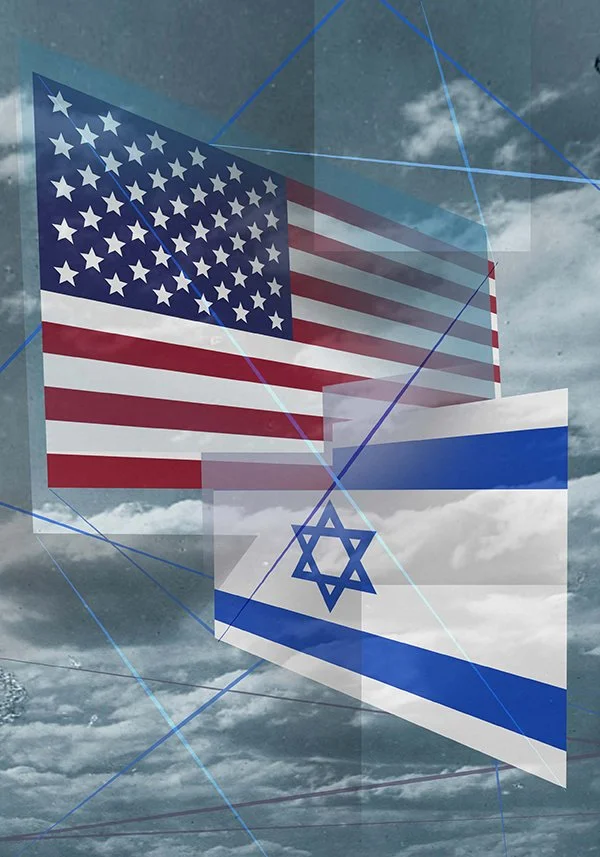
I want to encourage us to see American democracy and American Jewish life as joint projects of imagination with shared methods and shared stakes. American democracy and American Judaism have long been intertwined, from the disproportionate engagement of Jewish communities in civic movements to the ways in which conditions of liberal democracy have enabled Jewish flourishing. Both the American Jewish community and American democracy itself rely on an infrastructure of laws and rights to define boundaries of behavior and belonging. And for both, that infrastructure is only as powerful as the communities that engage with, enact, and abide by it. Right now, similar dynamics are limiting the capacity of each to grow, adapt, and thrive.
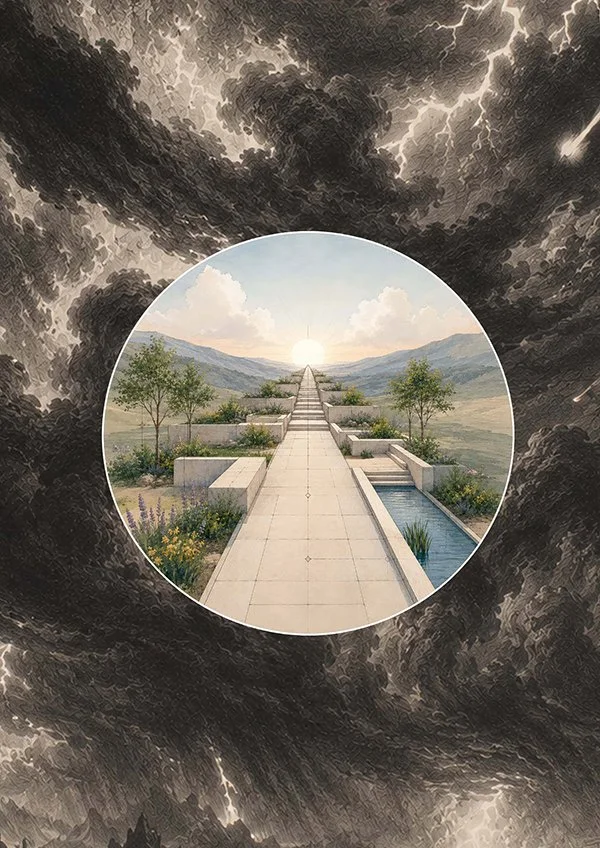
I call the patterns present in both the US pro-democracy movement and the American Jewish community the “Backwards-Looking Trap” and the “Fear-Based Futures Framework.” The Backwards-Looking Trap occurs when organizations and institutions focus on narrow, idealized visions of the past, limiting their abilities to envision different possibilities for the future. The Fear-Based Futures Framework emerges when these organizations and institutions orient their relationship to the future around what they are trying to prevent or avoid rather than imagining pro-topian visions of the future they want to build. In the movement to protect and perfect US democracy and in communal Jewish life, we run the risk that the Backwards-Looking Trap and the Fear-Based Futures Framework will act in tandem, squeezing narratives from both sides, with the space for expansive imagination shrinking in the middle. When this happens, we can become stuck, unable to fully reckon with the complexity of our own histories and unable to picture our own flourishing in the future.
The tendencies of both groups to fall into the same problematic patterns, however, means that solutions that are emerging in one setting can be borrowed by activists and leaders in the other. Together we can find ways of dreaming differently. What becomes possible when we dare to tell many alternative—and even directly contradictory—stories, allowing narrative abundance to fight an absence of imagination? What would it look like to refuse authoritarianism's use of terror and violence to narrow our narrative capacities by daring to share more expansive interpretations of the past and the future?
The Backwards-Looking Trap
In the past few years, various local, state, and federal government agencies in the United States have implemented formal policies aimed at sanitizing the past. The Office for Intellectual Freedom at the American Library Association has been compiling data on book challenges since 1990. In 2025, they reported challenges to 4,235 unique titles, the second highest ever (the highest ever documented was 4,240 unique titles in 2023). For comparison, from 2001-2020, the OIF tracked an annual average of 273 unique titles challenged––an increase today of almost 1,500%. Unsurprisingly, these challenges, often brought by a well-organized movement of pressure groups and influential decision makers, disproportionately target books by authors of color, LGBTQ+ authors, and women, covering topics on racism, sexuality, gender, and history—including the Holocaust.
A recent report by the Center for American Progress details how the Trump administration in particular manipulates access to public historical records to whitewash Black American history: “Through a multipronged strategy that includes purging diversity, equity, and inclusion (DEI) initiatives, pushing for changes in school curricula, and censoring museum exhibits, the administration has implemented a series of orders to reduce access to public areas and censor and rewrite historical exhibits, particularly those targeting the history and impact of Black Americans on public lands.”
Experts on democratic decline at organizations including the Russian Independent Media Archive, Freedom House, and Facing History and Ourselves point out how this kind of sanitization of history is a key step in the authoritarian playbook. Free speech advocacy organization PEN America writes in a 2025 report on the harmful impact of book bans, “Stories tell us who we are and who we can become.” During the Jim Crow era, organizations like the United Daughters of the Confederacy sought to ban textbooks that contained critical portrayals of slavery. Now, a vision of “restoration” and “making America great again” also demands a past that never existed: a monocultural, conflict-free founding in which the American story moves in a straight line from liberty to law, with no detours through slavery, Indigenous removal, disenfranchisement of women, or any other violent and systematic injustices.
When those of us with the power to do so erase stories that would give a less rosy but fuller picture of the historical past, we limit our own capacity to imagine a shared future. When we preserve and study the history of slavery in the United States, for example, we grapple with the complexities of our own capacities for violence and harm, as well as the anti-Black racism baked into some of our most powerful institutions. Erasing this history diminishes not only the fullness of who we are, but, to borrow from the PEN America report, our capacity to imagine who we might yet become.
Jewish storytelling, at its best, embraces complex stories in ways that are both past- and future-oriented. It is open-ended, embodied, multi-vocal, and often unresolved. Our texts are full of flawed heroes and leaders making grave and costly mistakes. We don’t just tell stories throughout our liturgy and history; we argue about the best way to tell them, who gets to speak, which children get to ask questions, and which questions are worth asking. We consider not just what we tell but how we tell it; we understand that the task of remembering the past is essential to imagining the future. Take the Book of Deuteronomy, for example, which presents a synopsis of the entire journey of the Jewish people through the desert, as if we had not just been reading those stories ourselves over the past weeks and months in the previous four books of the Torah. Before the Israelites can move into their future “promised land,” they (and we, as readers) must undergo a full retelling—a ritualized remembering—of their history.
But despite our rituals of remembering, American Jewish communities, too, can often become stuck in the dynamic of the Backwards-Looking Trap. We invest a tremendous amount of resources in preserving memory and story, but we do not always tell some of the more complicated and painful stories in our own history as openly as we could or should. Most liberal American Jews grow up hearing in near mythological terms about Abraham Joshua Heschel marching with Martin Luther King Jr. and the Black-Jewish alliance during the Civil Rights movement, without the more complicated tellings of this history: stories of hesitancy of Southern Jews to engage, the ways in which white Jewish communities enabled and contributed to segregationist policies, as well as the prominence of Black Jewish activists who made monumental contributions to the fight for civil rights. As a result, we encounter a history that can shut out voices of Jews of color and shut down discussion of past and present anti-Black racism within predominantly white Jewish communities.
Growing up in Reform institutions, I received a Jewish education focused on intellectual rigor and questioning that seemed to stop when it reached the history and role of Zionism in Jewish life. I was exposed to a particular history of the founding of Israel that left swaths of context and perspectives—especially meaningful accounts of Palestinian history, agency and experiences—untouched and overlooked.
This approach is more than just an absence of facts.
When we teach about a nation-state only as an extension of sacred identity and not also as a political entity with its own complex, violent history, we neglect to develop the ability to hold a nuanced coexistence of identity, attachment, and critique. We struggle to recognize the real harms a state has caused and to engage political questions as questions, rather than threats to our sense of self. For many US Jews raised this way, it is hard to distinguish criticism of Israel from existential threat, and even harder to access Palestinian humanity.
If we want to envision and work towards a future of peace and human rights for all Israelis and Palestinians, we must include all of their voices in the stories of the past. Excluding experiences from our telling forecloses the very imagination that a shared future requires.
I don’t believe ignoring more complicated or challenging parts of the Jewish past is always a conscious choice for erasure or a malicious limitation. It often comes instead from a place of grief, love, and a desire for continuity—we tell only the “best” parts of our past because they reflect who we want to be in the future.
But these ways of portraying the past have profound ramifications.
As the acclaimed fiction writer, essayist, and Second Wave Jewish feminist Cynthia Ozick argues in her 1979 piece, “Notes Toward Finding the Right Question,” this pattern of protective omission keeps us safe from the fullness of grief. She argues that by failing to include the voices of Jewish women in Torah scholarship, the Jewish community suffered “a loss numerically greater than a hundred pogroms…culturally and intellectually more debilitating than a century of autos-da-fe; than a thousand evil bonfires of holy books.”
Ozick mourns a Torah that never came into being and argues that in order to move forward, we must fully recognize and mourn that loss. A community that cannot hold the complexities of its stories cannot fully reckon with its own capacity for harm, its own internal disagreements, or the ways that zealotry has historically turned inward as well as outward. If we cannot understand these dynamics in our past, how can we act differently in the future?
Judaism includes technologies and teachers that can help us to metabolize our past and find within it the resources we need to imagine a different kind of future. By emphasizing a past- and future-oriented ritual grounded in embodied, sensory experience, the Passover Seder provides us with one set of tools for complex storytelling. In many ways, the Seder is the quintessential example of this type of engagement. We incorporate all of our senses to connect with the experiences of our ancestors: the salt water of tears, the bitterness of maror, the physical act of reclining as free people, even as we recount what it was to be enslaved. The body is implicated in the telling. The Seder is not only an exercise in remembering the past. Its very structure is an argument for the relationship between past, present, and future. As I wrote alongside futurists Suzette Brooks Masters and Lisa Kay Solomon in a future-oriented Haggadah supplement we published this spring,
At the Seder, we are asked to collapse time, inviting us to not just tell the story, but to imagine that we are in the story.... In observing Passover, we enter our own shared space, where ritual connects us to Seders past, present, and future. We are invited to tell the Passover story as if we were slaves in Egypt while reclining and celebrating as if we all are fully liberated—because in this Passover time-space, we share company with those celebrating the very first Exodus as well as those experiencing freedom in the future.
This is not simply nostalgia for nostalgia’s sake. We are commanded—b'chol dor vador, in every generation—to take on this cognitive and moral practice: placing ourselves inside a liberation not yet universally experienced, rehearsing a freedom we are still in the process of building. We end the Seder with “next year in Jerusalem,” an acknowledgement that the story has not even ended and, simultaneously, an orientation towards a world not yet here. As Solomon writes in a 2025 essay published in eJewish Philanthropy, “in these complex times, such imagination may be our most valuable inheritance.”
Even beyond what it can do for us as Jews, I believe this sort of remembering is something Judaism can also offer to activists engaged in American democracy work. What would it look like for the American democracy movement to invest in civic rituals that grapple with our complex history and don’t simply erase it? Such insistence on including history’s full complexity, the grounding of story through our senses, is itself an act of resistance. You can ban a book or restrict a curriculum. You can censor a harrowing depiction of immigration detention camps from mainstream cable television. But it is much more difficult to legislate the taste of bitterness out of the mouth or the sensation of rest out of the body.
The absence of meaningful democratic and civic ritual leaves a vacuum that can become filled with authoritarian spectacle: with rallies, flags, and the felt experience of collective belonging to something larger than oneself. The answer is to develop and sustain rituals that make the body remember what the mind might later be told to forget.
The “Our Common Purpose” report, published by the Commission on the Practice of Democratic Citizenship at the American Academy of Arts and Sciences in 2020, argues that political institutions and civic culture are in a cyclical relationship. The decline of one precipitates and aids in the decline of the other. The report defines two core elements of civic culture: narratives—“the stories we tell ourselves about ourselves: about our past, how we fit in (or do not), how we understand the present and imagine our future, and about who we are not”—and rituals—“heightened group experiences by which people make meaning together and mark progression in time and rootedness in history.” None of these elements is neutral, however. Narratives, as the report states, “can be cultivated in service of division as much as union” and ritual, too, can be performed in service of exclusion or disempowerment. It is incumbent upon us, the storytellers and practitioners, to employ these tools with intention and with a focus on their impact. We must ask ourselves: what does this ritual say about who is included in our democracy, in our Jewish community? What is the story embedded in this practice, and is that the story we want to tell? By investing in rituals that encapsulate fuller, more complete narratives—of our nation, our faith, our communities—we can strengthen the institutions that hold them.
The Fear-Based Futures Framework
If the Backwards Looking Trap describes the ways our narratives get squeezed from the past, the Fear-Based Futures Framework depicts a gap in both Jewish and American communal imaginations that limits our abilities to envision a multiplicity of futures. The most prominent visions of the future we do have are few in number and based mostly in fear. Dystopic visions of the future are not necessarily bad; we have entire genres of literature and cultural work devoted to apocalypse and dystopia that can help us prepare for possible futures in which things go terribly wrong. But they are only one narrow slice of available visions of what the future could hold.
Last summer, a report in eJewish Philanthropy described a gathering of prominent leaders in the US Jewish establishment who participated in a structured war-gaming exercise designed to help think about the next 25 years of US Jewish life. Rabbis, philanthropists, academics, and communal professionals used a rigorous format adapted from global emergency preparedness simulations to imagine various future scenarios. As fascinating as it was to read about the gathering, I found myself thinking about what was potentially missing from this conversation. Which voices of Jewish communities were not present and which visions of Jewish futures were not examined, even though they undoubtedly will play a major role in shaping the dynamics of the decades to come? I want our communities to envision futures that are oriented around questions other than: How do we survive what is coming?
Here, American Jews can learn from the work of pro-democracy advocates seeking to escape their own fear-based futures. Earlier this year, Democracy 2076, an organization advocating for long-term strategies towards more democratic futures, where I have also served as a consultant, released a report in partnership with Harmony Labs, titled, The Power of Story to Grow Democracy. Their report focuses primarily on entertainment media, examining the streaming media behavior of almost 120,000 adults, while this article is more concerned with communal ritual and memory. But while these are different issues, they point to the same underlying deficit: a lack of future-oriented stories and an over-reliance on the few that do exist.
Harmony Labs and Democracy 2076 tested how different story arcs moved four distinct audiences, segmented based on shared values, toward various narrative goals. Almost seventy percent of audiences tested agreed that there are real, urgent problems with unequal representation and freedom in US democracy, but only about one-third responded that they can easily imagine how democracy will work in the future. In other words, the problem recognition is there, but the imagination to envision how it will be solved is not. One hypothesis as to why is that the current media landscape lacks stories that inspire agency and imagination. Only eight percent of government-related stories in the entertainment media consumed by the surveyed population are set in the future. Entertainment media has a growing role in developing people’s understanding of US democracy—especially since investment in formal civics education has been declining in recent decades. The question is not simply how to make those stories more hopeful; it is how to make sure there are enough of them, and that they reach the audiences that need them most.
The answer, Harmony Labs and Democracy 2076 make clear, is more stories, full stop. They write, “For most audiences seeing the future is what matters most—it doesn’t even matter if that future is good or bad.” In fact, stories that lay bare the problems within governance systems—where democracy is portrayed as dysfunctional, threatened, or deteriorating—are necessary to illustrate the urgent realities of these problems and move audiences to demand action. Stories that only show stable, well-functioning governments generate backlash because they portray a system that is already working.
Additionally, different stories resonated with different audiences. For example, audiences that hold community as a central value wanted heroes who are system insiders working to transform, rather than replace or alter, existing institutions. They engaged most with media like The West Wing, Conclave, and Ted Lasso. Viewers more oriented towards authority as a central value engaged more with independent outsiders holding systems accountable and restoring them to their original principles—such as characters featured in The Mother, Reacher, or The Accountant 2. Importantly, the research also found that portrayals of ordinary people attempting to address problems led viewers to feel a sense of agency, especially when the agents of change act on behalf of people other than themselves.
This is the US democracy movement’s version of the “Fear-Based Futures Framework.” The stories that are most prominent in the pro-democracy field are primarily about authoritarian threat, dysfunction, and democratic backsliding. The field is poorly supplied with stories that show how to move beyond that dysfunction to a better future and how individuals can bring about that future. And yet, Democracy 2076’s research indicates that investing in these types of stories can create more engagement and empowerment for viewers––precisely the kinds of qualities needed for a thriving, participatory democracy.
I see a strikingly similar gap in Jewish institutional life. I came of age Jewishly in the early 2010s, after the fervor of the “continuity crisis” spurred by the National Jewish Population Survey of 1990 had begun to cool. And yet, the sense of opportunity and moral panic of that time remains evident even today in the programs, funding decisions, and distribution of power across legacy US Jewish institutions. This approach serves more as caution tape than road signs, warning of anticipated dangers rather than orienting us around something we can collectively build.
Often, when I am talking about Jewish futurism, especially with Jewish professionals a generation ahead of me, the conversation will turn to Theodore Herzl’s Altneuland, the 1902 utopian novel in which Herzl imagined a Jewish state into existence nearly half a century before the establishment of the State of Israel. This vision has been heavily criticized—and rightly so—for its erasure of Arab identities and its projection of a particularly limiting cosmopolitanism and conception of nation-building, among other aspects. But Altneuland was not a strategic preparedness exercise. It was an exercise in imagination, asking what a Jewish future could look like if it were built deliberately from hope rather than fear. Engaging with the form of Altneuland as well its content can be an opportunity to examine its limitations, its historical contexts, what it does well, and where it falls short.
The broader lesson is that instead of limiting ourselves to critiquing the visions that are presented (unsatisfyingly) to us, we can use them as invitations to provide our own projects of vibrant imagination, our own answers to the essential question of: What can we imagine in a Jewish future shaped by possibility, inspiration, and joy? This is a different question our communities are not asking nearly enough. We have rich traditions for mourning, for commemorating catastrophe, for vigilance against threat. We have disregarded our own similarly rich traditions for imagining expansive Jewish futures that are not defined primarily by what we survived.
The seeds of other visions—not blindly utopic, but those of growth, progress, learning, and collective thriving—are out there. I encounter them every day in my work amongst scholars, artists, clergy, nonprofit leaders, and community organizers. The lay leader who is training their community to hold vibrant ritual spaces in the absence of ordained rabbis, the small but mighty congregation in a rural town insisting on the prominence of its tradition alongside a commitment to pluralism. The work being done to further these visions receives comparatively so little visibility and investment—and that does an immense disservice to the kind of Jewish futures we are able not only to imagine but to realize.
III. Where This Leaves Us
The doubly constricting dynamic of the Backwards-Looking Trap and the Fear-Based Futures Framework has real implications: One boundary pushes in from the past—narrowing which histories can be told and which complexities can be acknowledged—while the other closes in from the future and hinders our ability to envision a multiplicity of futures beyond what is right now. The limitations that both place upon us carry with them the weight of fear, grief, and the necessity of survival. To do differently requires something more complex than optimism alone. But doing this work will also require sitting in discomfort, facing stories that describe a reality different from our own, mourning what has been or might be lost, and suspending an element of certainty to create space for creativity and imagination.
We need to invest institutional resources into imagining our unrealized futures from a place of positive vision rather than fear. What worlds are we seeding in this moment, and how does it feel to be oriented towards them, even in circumstances that make it seem more distant than ever? There seems to be no shortage of resources in the organized Jewish world devoted to programs and spaces trying to make sense of our past, our current moment, and our immediate future.
Alongside these investments, we also need spaces for imagination and dreaming, to devote resources to building our capacities for long-term visions, and to create permission structures for multiple alternative futures to exist simultaneously, even when they might directly contradict each other. What if we lived in a world in which we all were free, we all were flourishing? What could be possible then? Generations of Jews before us—from the prophets to Maimonides to Theodore Herzl—have modeled this for us and it is imperative that we carry on these practices. This is nothing new in the history of American Judaism, which has seen countless cycles of innovation and reimagination of theology, community, and practice from Mordechai Kaplan to Zalman Schachter-Shalomi.
Today, these types of imaginative spaces are being held across the Jewish communal ecosystem: An aptly named Big Jewish Gathering hosted on a snowy Brooklyn weekend bringing together Jews for “rerooting” in ritual and embodied learning; new models of Jewish day schools, congregations, and seminaries emerging across the country, with leaders empowering their community members to envision the Jewish institutions they want to see; cohorts of Jewish leaders being trained in skills of foresight and futurism. And in October 2026, The Judeofuturism Project will be bringing together US Jewish artists from across the country to create works imagining American Judaism in 2070—two thousand years after the fall of the Second Temple—to create a space of permission and provocation for communal imagination. This work isn’t easy or simple; I often find that inviting people to imagine beyond their present realities requires metabolizing real loss and grief. But this, too, is a Jewish practice. The tradition has never asked us to imagine from a place of ease—or a place of easy answers. It has asked us to imagine anyway, holding the destruction of the Temple and the dream of olam haba in the same breath.
In this moment, I believe choosing this kind of work is a sacred imperative. If we cannot envision the world any different than it is or was then we lose the very thing that makes change possible: the belief that it can happen, and that we have agency and power to make it so. The practices that make Jewish memory expansive are the same ones that can make democratic memory expansive. When we impoverish one, we impoverish both. This reality demands that we examine whether we are staying silent out of self-preservation or using our relative positions of power to resist the narrowing of historical memory and future imagination.
I believe it’s possible to have a world where all of us are liberated, safe, and healthy. It may not happen in my lifetime. But the only way to move towards it is to imagine it. And that is the work—strengthening, in our communities and our institutions, the muscles of creativity, storytelling, and imagination that make many different futures not just conceivable, but something we can begin building together.