Judaism, Zionism, and the Promises of America
Michael Koplow
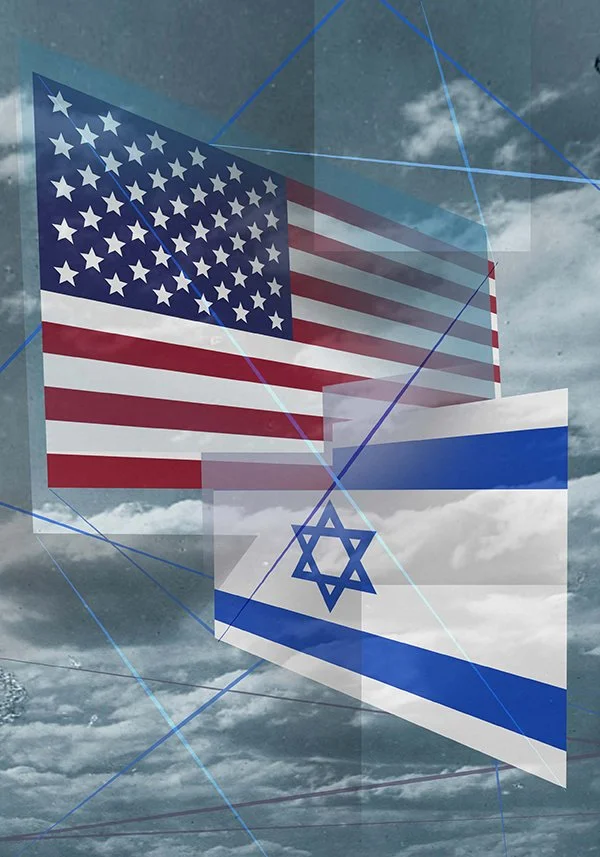
Credit: Kurt Hoffman
Michael Koplow is the Chief Policy Officer of the Israel Policy Forum and a Senior Fellow at the Kogod Research Center of the Shalom Hartman Institute.
When Louis Brandeis delivered his famous speech making the case for Zionism to the Conference of the Eastern Council of Reform Rabbis in 1915, the relationship between his Jewish identity and his American identity was at the forefront of his mind. The United States was in the midst of its second large wave of immigration. Nearly 18 million new immigrants arrived on American shores between 1890 and 1919 and nearly 15 percent of the country’s population were immigrants—the highest percentage in American history. Approximately two-and-a-half million of the new immigrants in these years were Eastern European Jews.
It was imperative to Brandeis that Jews be seen by non-Jewish Americans not as un-American, unassimilable transplants, but as people who fit into American civic life and traditions. As he said in his speech,
There is no inconsistency between loyalty to America and loyalty to Jewry. The Jewish spirit, the product of our religion and experiences, is essentially modern and essentially American. Not since the destruction of the Temple have the Jews in spirit and in ideals been so fully in harmony with the noblest aspirations of the country in which they lived. America’s fundamental law seeks to make real the brotherhood of man. That brotherhood became the Jewish fundamental law more than twenty-five hundred years ago. America’s insistent demand in the twentieth century is for social justice. That also has been the Jews’ striving for ages. Their affliction as well as their religion has prepared the Jews for effective democracy.
Because Brandeis was the president of the Zionist Organization of America, nesting Zionism firmly within the American political tradition was for him a key task. Brandeis’s address was a paean to American values, with the crux being that there was no contradiction between being fully Jewish, fully Zionist, and fully American. His argument grew from two core assumptions: that America afforded unprecedented opportunities for Jews, and that they needed to take advantage of these opportunities by asserting their full place in society without apology or fear.
To read Brandeis’s address today, with its concern over securing equal rights for Jews and its passionate defense of Jews as fully American without conflict or reservation, is to peer back in time to an environment that today’s American Jews have never known. To be sure, antisemitism does and always will exist, and American Jews will never be completely free from pockets of societal discrimination. But the idea that one of the country’s most prominent Jews would feel the need to stand up in public to assert that Jews should be viewed as Americans first and foremost, and to argue that Zionism is not a foreign transplant but is a logical outgrowth of American values and traditions, would until recently have struck most contemporary American Jews as unnecessary.
American constitutional protections and our sense of rootedness and belonging have made the last quarter century not only the Golden Age of American Jewry but arguably the high point of diaspora life across all of Jewish history. For decades, American Jews have felt completely at home, fully integrated into American society and institutions and the beneficiaries of the mythical but widely accepted notion of a Judeo-Christian tradition. We take our Americanness for granted and assume others do, too. We do not need to explicitly demonstrate that our ideologies and practices are rooted in American history and tradition because we assume these things are taken for granted as well. When the standard December drugstore holiday display is a Christmas tree next to a hannukiah, Brandeis’s defensive crouch seems a quaint relic of a happily bygone era.
But that does not mean that questions of American Jewish identity are fully settled. Rather than thinking about how the American Jewish community fits into larger American society, we tend to spend time on internal community gatekeeping. This, too, is a sign of the relative comfort of American Jews, since ideological boundary-setting can only become paramount when the group’s basic security is not deemed to be at risk. An internal Jewish schism over Zionism was prominent well before October 7, as we can see in countless think pieces published in Jewish outlets or in rifts breaking out in rabbinical schools during that period.
October 7 deepened this divide. A large segment of American Jews responded to Hamas’s attack on southern Israel and rising levels of antisemitism and anti-Zionism in the US with a greater sense of solidarity with Israel and its people, while a smaller but undeniably sizable and growing segment of American Jews responded to Israel’s actions in the Gaza war by detaching themselves from the Jewish state and its policies.
As arguments over Zionism have become fiercer, they have also become more parochial while the American Jewish conversation becomes even more internal. Were Brandeis alive today, he would no longer be trying to locate Zionism within the larger American political and ideological milieu but taking sides on the question of whether Zionism is a necessary component of being Jewish.
The irony is that the American Jewish turn inward has come at the time when we most need to do the opposite and become more outward facing. The American Jewish debate over Zionism has heated up immeasurably, but so, too, has the American debate about Israel writ large. Ten years ago, the concern was that the bipartisan pro-Israel consensus was disappearing as Israel’s standing eroded in Democratic circles. Today, the US’s status as a pro-Israel state is being attacked from both sides of the aisle, and Pew found in April of this year that 60 percent of Americans view Israel unfavorably. American Jews, and particularly the large majority who express an attachment to Israel, feel that their ability to be Zionist while also feeling at home in American society—the very things that Brandeis asserted not only as compatible but as inherently natural—is under threat.
What made Brandeis so confident that he was right? In an environment showing signs of hostility toward Jews and Zionists, Brandeis chose to engage and to proactively make the case for Jews’ full integration into American society without conceding any doubt. This stemmed from two of his core commitments, one to Judaism and one to American society. Brandeis was unwilling to shed his Jewish identity and accept complete ideological and cultural assimilation into American society, and he was also unwilling to accept that American society was fundamentally hostile to Judaism and Zionism. He viewed American society as containing unprecedented promise and opportunity, and the idea that it was irredeemable for Jews would have been anathema. He thus took it upon himself to meld these commitments together and appeal to the universalism of the United States in order to safeguard the particularism of Jewish identity, which for him had Zionism at its core.
Brandeis did not suggest that American Jews retreat into an enclave of their own creation in an effort to preserve themselves, either within American society or by emigrating to Palestine. He also did not suggest that American Jews shed the Jewish part of their identities. He was embracing the melting pot model that allowed Americans of all stripes to maintain ethnic and communal commitments without eroding their Americanness. Zionism was, for him, a defense of the rights of Jews, and it made sense to fight for that as an American concept. Rather than choose between these things, he argued that being an American required fidelity to Judaism and Zionism, and that fidelity to Judaism and Zionism required fidelity to America.
Today, many in the American Jewish community on both the left and the right argue for a different approach, which is to choose one commitment over the other, either Zionism or integration in American society.
On the left, a common tactic is to take the path of least resistance, which is to either downplay or shed one’s attachments to Israel. This is not to suggest that Jews, particularly those under the age of 40, who identify as non-Zionist or anti-Zionist are insincere in their opposition to the concept of a Jewish ethnically dominated state or to the specifics of Israeli policies. But many express a weariness over fighting for their place in progressive circles when it is easier to just wall off their Zionist attachments and identities. This can be seen in the JFNA survey of American Jewish life conducted in March 2025, which found one in three Jews saying that conversations about the Gaza war were negatively impacting their engagement with and belonging to the Jewish community. If the price of maintaining this political stance is breaking with the majority of the American Jewish community, this view says, so be it.
Jews on the right are not shedding their Zionism but, increasingly, their commitment to Jewish integration in all levels of American society. This manifests in the movement to withdraw from institutions previously central to the American Jewish story and now deemed hostile, such as elite universities, and to instead build separate Jewish institutions insulated from outside forces, or to cease efforts to engage with other groups and to instead concentrate on walling in and strengthening the American Jewish community. If the price of strengthening the American Jewish community is breaking with the rest of America, this view says, so be it.
These mirror image approaches share an unwillingness to concentrate on how to protect our community while remaining within the larger forces of American society and politics at a time that is as fraught as any in the living memories of most American Jews. The very thing that has made the American Jewish community special, if not unique, is our ability to hold to our values and identity without having to withdraw from the larger American project. Further, the approaches of both the left and the right carry risks, and neither will work in the long run to secure the American Jewish future.
But the approach of withdrawing from American society is particularly perilous. For starters, it ignores American Jewish history. As argued by Jonathan Sarna, among others, the American Jewish community became the most prosperous and successful Jewish diaspora community in history because of, not despite, American societal institutions. Our collective success has rested directly on engagement and pluralism, and it is foolhardy to assume that we can sustain our position and our success if we withdraw. This shortsighted view seems to assume that there is something unique about American Jews in comparison with all other Jews throughout history, as opposed to the more logical conclusion that the environment in which we have been privileged to operate is unique. American Jews have unprecedentedly succeeded as a group not because we have evolved beyond our forebears and contemporaries in other countries, but because of the advantages the US has afforded us. We are not different; our surroundings are.
Further, the impulse to withdraw from what appears to be an increasingly dangerous environment is not simply about mitigating risk. It is motivated by the idea that we have reached a point where American society is irredeemable, and we must shield ourselves—and more pressingly, the next generation—from encountering antisemitic forces that now run rampant. If we are indeed past the point of no return, then building Fortress Jewish America is not a real answer, as Jewish history tragically tells us. But even if things are not quite that dire—and to be clear, I categorically reject the notion that the US is no longer redeemable—forming our own hermetically sealed spaces and checking out of society at large remains a mistake on two fronts.
First, sealing ourselves off from institutions that are increasingly prone to conspiracy theories about Jewish power, hostility toward Israel, and ignorance about the basics of Jewish history and Zionism will not make those institutions better. The opposite is likelier, which is that they will get even worse as they become free of any contrary or moderating influences. It is naïve to assume that turning institutions into anti-Zionist, or completely Jew-free, echo chambers will seal off the negative consequences that ensue, and even more naïve to believe that American Jews will be able to thrive in this country if we are wholly encased in our own ecosystem.
If spaces and organizations that still include significant numbers of Zionist Jews now are beginning to question Israel’s legitimacy or blithely advocate for Israel’s wholesale transformation despite it being an actual entity in the world, withdrawing from those spaces rather than fighting to recover ground will only turn what is now a wave into a tsunami of delegitimizing Zionism. And as much as creating self-contained islands may look to some like a viable strategy, tsunamis overwhelm even enclaves that believe they are too high up and too far away to be affected.
The second risk is that the fragmentation that comes when different groups absent themselves from a common civic project will create more opportunities for forces unfriendly to the American Jewish community. The political scientist Sheri Berman has documented how this pattern played out in Weimar Germany, where disappointment with national politics led Germans to form their own civic institutions and organize into interest groups in unprecedented numbers. Different groups within German society creating their own walled-off ecosystems reinforced social cleavages and weakened independent political institutions. This in turn made it easier for the Nazi party to transform their totalitarian impulses into action. Berman is not the only scholar to point out that withdrawal may not confer the benefits and safety that its advocates suggest. Hannah Arendt argued that civic friendship—in other words, engagement with other groups—subverts power and combats totalitarianism, while eliminating any space for differences turns people into pariahs. Breaking away from a larger whole may feel like a way to consolidate strength or keep dangers at bay, but it can also make it easier to be steamrolled.
The nature and pace of technological change adds further risk to what is already a risky endeavor. Artificial intelligence is transforming accepted knowledge at a dizzying rate, to the point that even educated and sophisticated observers are sometimes unable to distinguish what is real from what is not. Part of what allows disinformation and conspiracy theories to spread is that we are increasingly turning ourselves into groups of one, spending our lives online and alone. This diminishment of social interactions is warping our collective sense of reality, and antisemitism thrives in environments where reality is hard to ascertain and people are looking for the hidden hand behind everything they experience.
The best counter to this trend is firsthand experience with the unfamiliar things that are breeding fear and even contempt. There is already an enormous amount of disinformation about Jews and Israel coursing through American society, and the current populist political moment makes that likely to increase. Now more than ever, it is imperative that the Jewish community interact with others outside of our bubble rather than cloister ourselves, making it harder for people to believe the most noxious conspiracy theories about Jews. If our response to antisemitism is to have even less interaction with the outside world, it makes believing the most outrageous charges about Jews and Zionists even easier for people who have no firsthand knowledge of either.
But continuing to engage in wider society rather than erecting walls is not enough. One of the lessons to be gleaned from last year’s Yale Youth poll—which documented rising antisemitism among 18-22 year olds in particular—is that Americans, and especially younger Americans, do not understand the relationship between Jewish identity and Israel that is shared by most American Jews, or even why it is important to American Jews that Israel be a Jewish state. The relationship between American Jews and Israel is becoming far more complicated, as evidenced by the internal communal ferment over Zionism. But as we argue amongst ourselves and negotiate what Zionism looks like in an age of unprecedented Israeli military power (and willingness to use it), we lose sight of the fact that if it is confusing to us, it is all the more so to the 98 percent of Americans who do not identify as Jewish.
We have to explain why Israel matters to us rather than just take it for granted that everyone understands, and we have to explain why Zionism does not make us less American rather than just take umbrage at those who view it as a textbook example of dual loyalty. And that means we need to clarify our attachment to the State of Israel for ourselves first.
And why should Zionism be important to us as American Jews? After centuries of living only in diaspora, to live in an era of a sovereign Jewish state is not only a privilege but an anomaly. We must take this rare reality seriously both in concept and in practice. Engaging as Jews with an actual Jewish state, even from afar and not as citizens, enriches our lives in multiple ways. Our long-distance connection to Israel provides the opportunity to celebrate Jewish sovereignty and meaningfully make a commitment to the Jewish political project, while simultaneously interrogating our views about Jewish power and responsibility in the real world, beyond abstract considerations. It allows us to think more deeply about the obligations of statehood, how states have constituencies beyond their own citizens, and the ways that states’ choices and actions impact people well beyond their borders. It allows us to imagine what an ideal Jewish state might look like and work towards helping Israel become the best version of itself.
Zionism enriches American Judaism itself. The existence of a Jewish state means that living here in America is an active choice rather than a condition thrust upon us. This sense of choice has created an American Judaism that is more diverse than Israeli Judaism and has allowed us to cultivate a richer sense of Jewish peoplehood. To live a Jewish life and embrace a Jewish identity, however one conceives of it, requires more work as a minority in a country where we are only two percent of the population than it does in a majority Jewish state. The presence of Israel and the knowledge that we could live in a Jewish state anytime we choose makes American Judaism more meaningful as an active choice, and the more connected we are to Israel, the richer that choice becomes.
That connection is not only about making our version of Judaism more meaningful. Zionism inculcates a rich sense of peoplehood by providing a Jewish model that is very different from our own. Our shared sense of mission with Israeli Jews, helping them build and sustain a state through tangible support or even just moral support, and the empathy we have for the different circumstances and challenges they face, creates a kinship that is more diverse, more complex, and thicker. Americans have always sorted themselves into tribes, whether ethnic, political, religious, or otherwise, and tribalism is powerful because of the connections it fosters. American Jews are no exception, and Zionism allows us to expand our tribe just a bit more. To wall this off because it also challenges us in many ways and even strikes some of us at times as abhorrent is a tragically wasted opportunity.
The vision Brandeis articulated more than a century ago is our reality: We can be fully American while also helping to build and sustain a Jewish project that transcends borders. Zionism in America affords a way of holding onto both the universal and particular aspects of Judaism in a full way. It lets us be an integral part of the American project and contribute to it as full Americans, with Judaism being one aspect that informs and enriches larger American society and culture and serves as an aspirational model for ethics, philosophy, and wisdom. At the same time, it lets us contribute to a uniquely Jewish experience by identifying with the Jewish state and supporting something that transcends borders as our own. It also honors and upholds a vision of America as a mixture of people of different backgrounds and heritages, making the emerging stew richer and more complex. An American Judaism that turns its back on Zionism will make its adherents’ Jewish identities and American identities poorer.
But even as I can argue for the benefits of Zionism, I must also acknowledge that it is a confusing concept for Americans. American Jews are not demanding our own liberation as the original Zionists once did, and we are articulating a vision of Jewishness as nationalism while living in a country that defines it as a religion rather than a national or ethnic category. At the same time, anti-Zionism is no longer a fringe belief among Jews, and support of Israel among Americans more broadly is at an all-time low. This new reality is driven by events on the ground more than anything else, whether two years of war in Gaza and ongoing Israeli militarism in the West Bank and Lebanon, or the perception that Israel pushed President Trump to launch an unpopular war on Iran. But it is also partly a result of the American Jewish community dropping the Brandeis approach of explaining ourselves to American society and expressing our concerns and priorities in a way that puts them in a wider aperture rather than taking for granted that the reasons we hold our views are obvious.
We must pivot and change our outlook and our strategies, and that means more engagement rather than less. Most of all, we need to stop thinking about why Israel matters to us as only an internal question and start thinking of it as a question that matters to American society at large and our place in it.
Brandeis did not make his argument for Zionism in 1930s Germany, when Jews were on the precipice of being wholly expelled from society. He made it in 1915 America, when Jews were fighting for greater acceptance. If we are living through a repeat of history, that is the more apt analogy. And indeed, American Jews since that time did experience antisemitism in institutions, efforts to keep them out of universities, and uncomfortable interactions in different corners of American society, all of which are happening again, but centered around challenges to Zionism and to Jewish identity. The way that American Jews overcame these challenges the first time was through engagement rather than further withdrawal, and we were able to move this country to a better stage. If we view American society as redeemable and worth fighting for rather than as a lost cause, we must seize the moment the way Brandeis did and press our case beyond our walls. Now more than ever, we must relearn how to reach out and explain, in a more universal and less parochial way, what is important to us and why.