American Jewish Philanthropy’s Civic Mission
Rona Sheramy

Mrs. Grover Cleveland lays the cornerstone for the Hebrew Technical School for Girls building in 1904. Courtesy of Jewish Foundation for Education of Women
Rona Sheramy is Executive Director at Jewish Foundation for Education of Women (JFEW).
In times of Jewish insecurity, should Jewish philanthropy turn inward and devote more of its resources to Jewish causes, or should it double down on broader social and civic commitments? This past February, in his State of World Jewry address, Bret Stephens issued a resolute response, warning that “constantly seeking to prove ourselves worthy in order to win the world's love is a fool's errand” and arguing further that “the proper defense against Jew hatred is not to prove the haters wrong by outdoing ourselves in feats of altruism, benevolence, and achievement.” We Jews, he urged, would have much greater impact if we would “spend the money and focus our energy elsewhere,” namely, on Jewish engagement and education.
With billions of dollars of assets at stake, and existential threats rewriting American Jewish self-perception, Stephens’s view is not surprising. We are living in distressing times, with animosity against the Jewish people unlike anything we have seen in this country for close to a hundred years. October 7 and its aftermath fueled antisemitism to degrees that have made Jews question their physical security and welcome status. At the same time, the Pew Research Center’s Jewish Americans in 2020 datapoint that “religion is not central to the lives of most U.S. Jews,” bodes poorly for a Jewish future of any substance, according to several analyses that accompany the data. The longing of “October 8 Jews” for meaningful Jewish connection may help to reverse this trend, but time is of the essence to launch programs that meet their needs.
In these times of heightened vulnerability and survival anxieties, a Jewish philanthropy’s commitments can feel like a litmus test of peoplehood and loyalty. For funders navigating priorities inside and outside the Jewish community, this moment constitutes the most profound test of their strategy in a generation, if not a century.
As the executive director of Jewish Foundation for Education of Women, a legacy Jewish philanthropy that advances economic mobility for women of all backgrounds and is engaged in exactly the sort of “altruistic” and “benevolent” work Stephens was gesturing at, I believe that Jewish support for civic, educational, and social welfare causes is not a departure from Jewish priorities, but is, rather, both the expression of a distinctly American Jewish worldview and in American Jews’ long-term best interests. My own organization’s commitments originate in American Jewish immigrant history, Jewish values, and Jewish investment in a vibrant pluralistic democracy. For us to abandon or significantly reduce our work outside of the Jewish community—especially in educational and civic spaces—would be to deny the very expression of American Jewish identity and historical legacy that many Jews find so profound. En masse, it would weaken America’s pluralistic and democratic norms and institutions, which are essential to Jewish well-being.
In this article, I explore Jewish Foundation for Education of Women’s history and mission, as well as those of other Jewish philanthropies, as a case study for this argument. JFEW today supports programs specifically for Jewish women and programs for women of all backgrounds. I will trace this approach back to the late nineteenth century and the flood of immigrant Jews from Eastern Europe whose arrival transformed all aspects of American Jewish life. I will then consider the Jewish values that have shaped the work of JFEW and other philanthropies in the latter decades of the twentieth century to the present, when several Jewish organizations, influenced by the Jewish historical experience and Jewish teachings, have turned their attention outward, beyond the Jewish community. I will conclude with the role that Jewish philanthropies have in protecting American democracy and pluralism through social justice and equity work, a crucial point post-October 7, when American Jews do not always feel welcomed in these efforts.
Competing Notions of Jewish Best Interests
From the origins of American Jewish philanthropy in the seventeenth century, Jewish leaders have debated how best to allocate resources, especially in times of crisis. Their disagreements reflect different visions of how Jews should take care of their own needs, physical and cultural, while also participating in and contributing to American society. Rising antisemitism at home and abroad have repeatedly brought such discussions to a fever pitch, the hostility to Jews following October 7 being just the most recent example. When we take a broader view of the history of American Jewish philanthropy, we see that Stephens’s perspective is not new, but part of a long tradition of Jewish leaders exhorting the Jewish community to circle the wagons to ensure Jewish survival. We also see good reasons for Jews to continue investing in the well-being of all their neighbors, Jewish or not: as an expression of human connection and empathy, given our own historic experiences of dislocation and poverty; as a means of engaging with and living out our Jewish values; and as an investment in democracy, which is essential for long-term Jewish security. These reasons, I believe, remain relevant, even in this particular moment of crisis.
JFEW offers a good case study for understanding trends in the history of American Jewish philanthropy. Part of a broader movement to Americanize Eastern European Jewish immigrants and prepare them for an industrialized economy, it was founded as the Louis Down-Town Sabbath School on the lower east side of New York in 1880, by the educator and philanthropist Minnie Dessau Louis and other German Jewish doyennes of Temple Emanu-El, a bastion of Classical Reform Judaism. Like American Christian women of her social status, Louis created a “voluntary association” to address needs for which government did not provide. She and her sister volunteers reflected the prophetic tradition in Classical Reform, with its emphasis on moral deeds and social justice, while at the same time expressing discomfort with the “downtown Jews” with whom this tradition brought them into contact, a dynamic documented in historian Jonathan Sarna’s American Judaism. The Sabbath school’s stated purpose was to “elevate the character and condition of the children of the Jewish poor in the City of New York, by ethical, religious and secular instruction; and to relieve their physical wants by furnishing them with clothing and refreshment.” Underneath this lofty mission, as Jenna Weissman Joselit details in her history of the foundation, was deep anxiety about how these unkempt, religious immigrants would affect the uptown Jews’ security and status (antisemitism was then, as now, a concern). The Sabbath school had an almost obsessive emphasis on cleanliness and hygiene, meant to ensure that the new arrivals were not sources of embarrassment or disease.
The connection between schooling and economic mobility came early in JFEW’s history, as Louis and others were quickly forced to confront their students’ dire financial need. Lessons in manners and personal care would not save their charges from the sweatshop or factory floor (or worse, prostitution), and they worried that direct cash support might be spent in unintended ways. Immigrant girls needed skills that could earn them higher paying jobs and middle-class respectability. The Sabbath school evolved into a proper vocational institute, the Hebrew Technical School for Girls, with a state-of-the-art school building dedicated in 1906.
JFEW’s first foray into a nonsectarian mission had come four years prior, when the board of Hebrew Tech, as it was colloquially known, voted to open its doors to “Hebrews and others.” Jewish support for nonsectarian causes and interfaith relations was not unique at the time. It came in the context of heightened concerns in the Jewish community about their perception as equally and rightfully American, and efforts by Protestants to evangelize and root Americanism in Christian values, as chronicled in Sarna’s American Judaism. The mid to late nineteenth century witnessed several examples of Jewish assistance to their non-Jewish neighbors, which fused Jewish values and civic mindedness: Jews opened their hospitals to the public and provided assistance in natural disasters. Perhaps no one had a bigger impact than Julius Rosenwald, a major benefactor of Jewish and nonsectarian causes in Chicago, who, “noting the unique empathy Jews feel for victims of racism due to their own historical experiences with discrimination and persecution,” according to historian Jack Wertheimer, funded a network of schools in the South to educate Black children.
In making the case for non-Jewish students, Hebrew Tech’s board president, Nathaniel Myers, reflected the ideals of Classical Reform Judaism, like Minnie Louis before him. He insisted on the compatibility of Americanness and Jewishness and on the value of universalism. Myers asserted that allowing broader admission to Hebrew Tech beyond Jewish families would promote understanding among Christians and Jews, which itself was a civic value. At the school’s annual meeting in 1902, he said, “whatever tended to promote the assimilation rather than the keeping apart of all elements of the American people was a thing to be desired and struggled for by all good citizens.” The move to nonsectarianism was as much about opening access to an excellent technical education as it was about creating a microcosm of what wider society should be. But despite the good intentions, no more than a few Christian girls matriculated at the school, as Joselit records; this was possibly because of its location in a heavily Jewish neighborhood.
In 1932, facing a number of economic, social, and educational headwinds, the board of Hebrew Tech made the fraught decision to cease operations. By the end of the decade, it had sold its property to the New York public school system. The proceeds of that sale, as well as donations from devoted supporters, were used to fund a new initiative, the Educational Foundation for Jewish Girls. Its purpose was to give scholarships to young Jewish women, the same demographic that had attended Hebrew Tech. Reflecting on the history of the foundation in 1989, third-generation board member and longtime board president, Charles Tanenbaum, surmised in a letter to a fellow director that “in the depth of the depression, Jewish needs seemed uppermost.”
According to historian Pamela Nadell, since the 1920s, Jewish women had been entering college in numbers two to three times that of Christian women. And yet, most came from families where it was more common to save funds for sons to attend university than for daughters. This trend, combined with the fact that Hebrew Tech primarily served a Jewish student body, likely explains why there was an inward turn at that time.
JFEW’s return to nonsectarian work came in1964, under the board leadership of Charles Tanenbaum. The demographics of New York City had dramatically changed, and the Second Great Migration and Hispanic immigration, especially from Puerto Rico, had transformed New York City’s neighborhoods. Some JFEW recipients noticed the changes and needs in other communities. In 1952, a Jewish scholarship recipient expressed a connection between antisemitism and anti-Black discrimination in feedback to the foundation:
I am aware, especially since I now work in Harlem, that the need for educational assistance in the field of nursing is extremely pressing among young negro women who desire to enter this vital profession. Has the Scholarship Committee ever considered assisting young Negro women?… I believe it is as necessary for us...to strengthen the democracy in our country which is being slowly undermined by the presence of almost fifteen million persons denied the benefits of full citizenship.... For not only do most honest Jewish people admit that anti-semitism is a [sic] active force today but they must also understand the evil effects of anti-negro sentiments and behavior.
According to board minutes, discussion began in 1963 about the need “for certain changes necessitated by… changes of our American way of life.” JFEW’s Policy Committee subsequently called for Jewish engagement in the great issues of the day, reflective of the enduring influence on JFEW of Classical Reform Jewish values around Jewish integration in the wider society.

Gym class at the Hebrew Technical School for Girls, early 1900s. Courtesy of Jewish Foundation for Education of Women
Ultimately, Tanenbaum and the board’s Policy Committee led the organization in this direction, drawing a line of continuity between the universalist turn in 1964 and the vocational school ethos earlier in the century. The foundation “seeks to return to the non-sectarian philosophy of the Hebrew Technical School for Girls,” Tanenbaum wrote in the petition to the New York State Supreme Court to expand the foundation’s mission. “The Board has become increasingly conscious of the limiting effect of the [foundation’s] sectarian restriction” and the foundation’s Policy Committee “felt that the limitation was inconsistent with the present day national trend toward an integrated non-sectarian society, and recommend an expansion of the purposes of the foundation to include opportunity to help other than Jewish girls.”
This decision was made against the backdrop of heightening particularism and ethnic expression in the American Jewish community, and the board wrestled with the question of its responsibilities to the Jewish community and to the wider society. Board minutes record discussion of how broadening the scope of scholarship recipients might impact the foundation’s longstanding commitment to Jewish women, and whether the foundation should change its name from the Educational Foundation for Jewish Girls to “a more general title.” JFEW’s leaders ultimately voted to formally expand its corporate purpose to “assist girls of the Jewish and other faiths” but to implement the change gradually, with “the proviso that the types of [Jewish] applicants heretofore helped would continue to be assisted to at least the same extent.” The foundation also changed its name to Jewish Foundation for Education of Girls at this time (it would become “Women” in 1977), keeping “Jewish” in the title.
At this turning point in JFEW’s history, we see a microcosm of the critical junctures so many American Jewish organizations have faced. The crises that gave rise to them have passed (think Hebrew Immigrant Aid Society and Hebrew Free Loan Society), and the organizations must navigate their full engagement in and sense of duty to both Jewish and American society.
Philanthropy as an Expression of Jewish Values and American Civic Commitments
Philanthropy has become a particularly American expression of Jewishness. In Sacred Survival: The Civil Religion of American Jews, the late sociologist Jonathan Woocher identifies tzedakah as one of the tenets that bound American Jewish leaders in the decades following World War II. This value trickled down to the communities they led, creating an ecosystem of non-religious activities through which Jews still felt profoundly Jewish. While several of the tenets had waned by the end of the twentieth century, the pursuit of social justice continues to be one of the most popular means by which Jews outside of Orthodox communities feel themselves to be behaving Jewishly. Indeed, according to the 2020 Pew study of American Jewry, 59% of American Jews believe that working for equality and justice is essential to Jewish identity, in contrast to 15% who believe that observing Jewish law is.
JFEW’s mission statements over the past twenty-five years reflect these trends in American Jewish self-perception and activities. They explicitly assert Jewish principles and experiences at the core of the foundation’s work, and social justice as an expression of JFEW’s Jewish origins and identity. A statement from the early aughts identifies JFEW as a nonsectarian organization, at the same time as it roots this identity in Jewish principles and commitments: “At its inception, JFEW… was created and supported by Jewish philanthropists to provide training for poor, immigrant Jewish women…. Today, JFEW is a nonsectarian organization. Its goal, however, remains the same…. Through its scholarship aid, the Foundation continues to fulfill two central tenets of Judaism: providing education and helping those in need.”
In 2023, JFEW’s revised mission statement further sharpened its Jewish identity with concepts that had grown popular across the Jewish community over the latter decades of the twentieth century: “Guided by our Jewish origins and values,” the new statement reads, “JFEW supports higher education for women with financial need to help them achieve a post-secondary degree, career readiness and economic mobility and security.” Among its values, the foundation cites chesed (kindness and compassion), tzedek (justice), and tikkun olam (repairing the world). These values reflect and inform everything we do—from our relationships with students and our notion of the inequities in higher education that need remedy, to the wrongs we want to right around economic mobility. (It’s noteworthy that the 2023 mission statement no longer refers to JFEW as a nonsectarian organization, since the foundation has always maintained specific portfolios to support Jewish women.)
JFEW is not alone in this rhetorical framing. Today, this expansive concept of tzedakah, along with a set of other Jewish beliefs, inspires the work of countless Jewish organizations. Several of the most prominent foundations that give inside and outside the Jewish community root their work in similar values, including the Charles and Lynn Schusterman Family Philanthropies (“We ground our philanthropic vision in our commitment to the pursuit of justice (tzedek), repairing the world (tikkun olam), treating all people with civility and humanity (derekh eretz) and building inclusive communities”); The Harry and Jeanette Weinberg Foundation (“Our mission and work are grounded in core Jewish beliefs and teachings. The Torah states ‘there shall be no needy among you,’… Jewish texts also emphasize the value of kavod (כבוד) — honor, respect, and dignity — and describe an honorable person as one who honors all others”); and the Crown Family Philanthropies (“From generation to generation, we work together, with our communities, in the spirit of tikkun olam, to catalyze and advance just and lasting social impact”).
Despite the prominence of philanthropies that invoke this framing and the popularity of values language, a number of Jewish thinkers and leaders question the authenticity of values statements, especially when adorning the websites of organizations without clear engagement in Jewish learning or causes. In his Substack column, Andrés Spokoiny, CEO of the Jewish Funders Network, claims that “what passes today as ‘Jewish values’ reads like the product of a nonprofit branding exercise: a set of declarative, universally accepted principles—justice, compassion, repair—that can be divorced from their sources, arranged on a website, and made to underwrite whatever program happens to be at hand.”
For others, the language of tikkun olam raises questions. Perhaps no phrase is more associated with American Jewish do-gooding than tikkun olam, a concept with Talmudic origins that influential Jewish theologians, educators, and social activists connected to social justice in the 1960s and 1970s. By the 1990s, as the historian Jonathan Krasner explains, tikkun olam, with its “contemporary…emphasis on human agency in bringing about God’s kingdom on earth” was “everywhere.” But the widespread adoption of tikkun olam by Jewish organizations and donors has aroused skepticism. Virtually any good deed can be characterized as “healing the world” and advancing justice, the argument goes, without much specific Jewish engagement or knowledge required. In a report published by the Jewish People Policy Planning Institute, the scholar Yehudah Mirsky argues that, “It is unclear that Tikkun Olam can serve as a meaningful, long-term basis for Jewish identity in the absence of some other commitments to Jewish peoplehood and civilization, to distinctively Jewish forms of spiritual life, the Jewish textual tradition, and so on.” Particularly since October 7, others have asserted that tikkun olam is simply naïve: Why should Jews have to heal the world when the world has turned its back on us?
These are understandable concerns regarding concepts ascribed so much inspirational power. Any organization can claim Jewish values at their core, even those whose activities might be far removed from Jewish interests. But the pervasiveness of values language should not be grounds for dismissal. Rather, it should be understood as existing along a continuum. Some values language reflects deep understanding of halakhah and Jewish texts, and some is more what the anthropologist Vanessa Ochs calls Jewish sensibilities: ways of engaging in the world, informed by a diffuse amalgam of Jewish cultural, historical, and ethical traditions. Instead of dismissing the more abstract expression of Jewish ethical and moral language, we can view it as an invitation for more meaningful Jewish engagement.
Jewish Philanthropy’s Mission to Protect Democracy
American Jewish philanthropy has a long history of supporting both Jewish and nonsectarian causes for a variety of reasons. I want to argue further that our continued support of one specific nonsectarian cause is now more important than ever: protecting democratic institutions and practices. Minnie Louis and her peers adopted the quintessential democratic structure of voluntary associations to help build a social welfare network for new immigrants that government did not provide. Almost 150 years later, JFEW and philanthropies like it are working to protect core features of American liberal democracy, in which Jews and other minority groups are most likely to thrive. As I stated at the outset, some commentators argue that now is the time to redirect funds to Jewish causes, because of great need within the Jewish community, and great antagonism outside of it. But the concept of a “Jewish cause” needs to be broadened beyond meaning that only Jews or organizations run by Jews benefit, as Aaron Dorfman, founding executive director of A More Perfect Union: The Jewish Partnership for Democracy, explained when he was a guest on the Judaism Unbound podcast. We need to think long term about the forces and conditions that protect Jews and the causes that can benefit from Jewish ethics and teachings. Put this way, there is no more pressing Jewish cause than work to protect democracy in America, or, as Dorfman describes it, “the water in which we swim.”
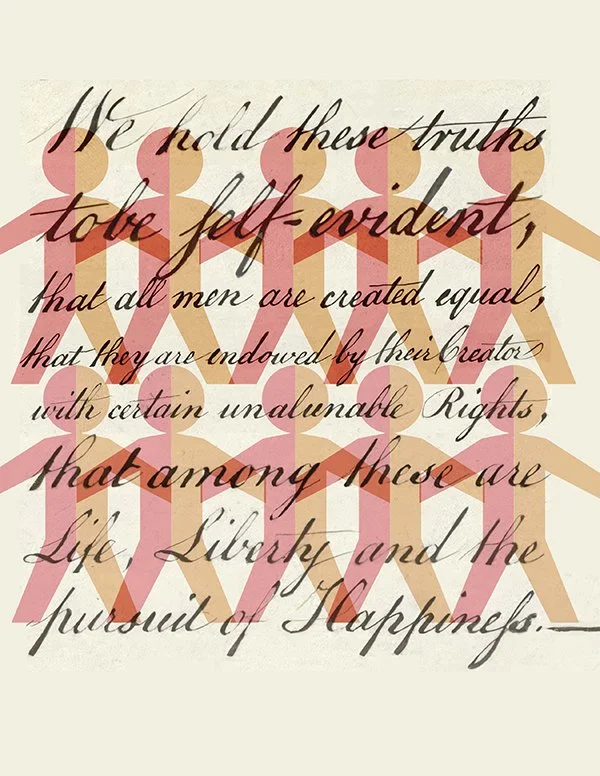
The American Jewish community has flourished largely due to religious rights guaranteed in America’s founding documents and the pluralism extended, fitfully, to Jews and other minority groups over the twentieth century. From freedom of religious expression enshrined in the First Amendment, to Article 6 of the Constitution ensuring no religious tests for public office, America offered unparalleled freedoms to Jews at the outset, in contrast to the highly variable and dependent status Jews held elsewhere over Diaspora history. The gradual institutionalization of pluralistic values over the twentieth century—the notion that cultural difference is a strength of democracy and that ethnic communities could maintain their distinctiveness while fully participating in American life —further benefited Jews, who themselves helped to shape the intellectual framework behind this movement.
Jews, in turn, have sought to protect the civil liberties that undergird democracy and build a pluralistic society, with philanthropy supporting many of these efforts. From the work of Julius Rosenwald in the early 1900s to the commitment of the Lippman Kanfer Foundation to strengthening democratic practices and civic engagement over the past decade, Jewish funders have supported causes that echo past Jewish vulnerability and protect Jewish and other minority groups’ interests in the future.

Cooking class at the Hebrew Technical School for Girls, early 1900s. Courtesy of Jewish Foundation for Education of Women
While much of the pro-democracy work by Jewish philanthropies focuses on basic rights—free and fair elections, freedom of speech and the press, equal justice under the law—foundations like JFEW that work to advance equity in sectors like education have a role to play in protecting democracy. Much research has been done about the capacity for higher education institutions to reify inequity rather than dismantle it (see the work of Raj Chetty and Suzanne Mettler). Therefore, initiatives that break down barriers to a college degree—tuition scholarships, basic needs support, advising—help to protect one of the greatest drivers of economic mobility. And this economic mobility gives people a stake in American institutions—they see the system as full of potential and promise, rather than corrupt and in need of dismantling. As UCLA Dean Eileen Strempel and College Board executive Stephen J. Handel wrote in 2021, “The difficulty low-income people face completing college and finding sustainable jobs is not just a problem for individuals or families, but for our entire society.… Large portions of the U.S. population feel little or no stake in foundational structures of our democracy.” By ensuring that more people have a stake in and see a future for themselves in American democratic institutions—through education, jobs, the means to survive and thrive—Jewish organizations can help secure a world in which Jews and other minority groups can flourish.
Some may argue that investing in institutions that have been hostile environments for Jews—namely universities, but also organizations across virtually every sector—is counterproductive. Why reward and strengthen these entities? In his “State of World Jewry" address, Bret Stephens brought this point home: “What Jews need now isn't allyship or sympathy or a seat at the table of the world’s victimized groups. What we need is the wisdom of the composer Philip Glass who said, quote, If there's no room at the table, build your own table.”
The choice whether to remain at the table or build your own can be among the most fraught and painful a Jewish funder has to make, especially because those most impacted by the withdrawal of funds are usually far removed from the decisions deemed antisemitic in the first place. Think about the low-income commuter college student, the uninsured person with a chronic disease, the green card applicant needing legal assistance. It need not be an either/or choice. We Jews can and should build spaces just for ourselves at the same time that we assert our rightful place at tables across American society. This is a long game for American Jewish philanthropy, and one that we should not abandon, regardless of the immediate pressures of our particular moment. There is too much at stake to fully retreat into our own corner.
A Glass Half Full
American Jewish philanthropy today derives from the unique demands and bounty of the Jewish experience at home and abroad over the past 250 years. It reflects a uniquely American take on Judaism—in JFEW’s case, Classical Reform Judaism at its origins and civil Judaism in the late twentieth century—and a historical consciousness about how the Jewish past shapes Jewish obligations today. While there are many interpretations of these responsibilities, commonality exists among donors, like JFEW, that see their work as deeply Jewish in both sectarian and nonsectarian spaces.
Ultimately, a philanthropy’s position on turning inward or turning outward during times of crisis may reflect whether they are more optimistic or pessimistic about the Jewish future. Are we an ever-dying people or an ever-regenerating one? Can we afford— fiscally and psychologically—to be expansive regarding our sphere of responsibility, or is it necessary to have a scarcity mentality? As a student of Jewish history, I subscribe to the philosophy of Jonathan Sarna, whose narrative of American Jewish history identifies a series of crises and creative responses—new movements, new institutions, new cultural creations—at the core of the American Jewish experience. No one wishes for any of these crises, yet as a community, we have a track record of survival and generativity under pressure. Indeed, JFEW emerged out of such a crisis—the dislocation of more than two million impoverished Jews who needed new homes, new skills, and new ways to support their families.
I believe we can weather this very real crisis, as Jews have for millennia. The friction at the core of allocation decisions (inward/outward; particular/universal; parochial/nonsectarian) is not a problem to be solved but an enduring characteristic of the American Jewish experience. As Stacy Schusterman, chair of the Charles and Lynn Schusterman Family Philanthropies, observes, “The tension we hold between our universal and particular callings is a feature of Jewish peoplehood, not a bug. The roles we must play for our own people and for the world around us are interwoven. To separate the strands would be to unravel something sacred.” Moreover, Jewish support for civic, educational, and social welfare causes does not deviate from Jewish priorities, but instead, by reinforcing American democracy, helps to ensure American Jews’ long-term best interests.