When Jewish Educational Innovation Reinforces the Status Quo
Jonathan Krasner
Jonathan Krasner is Jack, Joseph and Morton Mandel Associate Professor of Jewish Education Research in the Department of Near Eastern and Judaic Studies and at the Jack, Joseph and Morton Mandel Center for Studies in Jewish Education at Brandeis University.
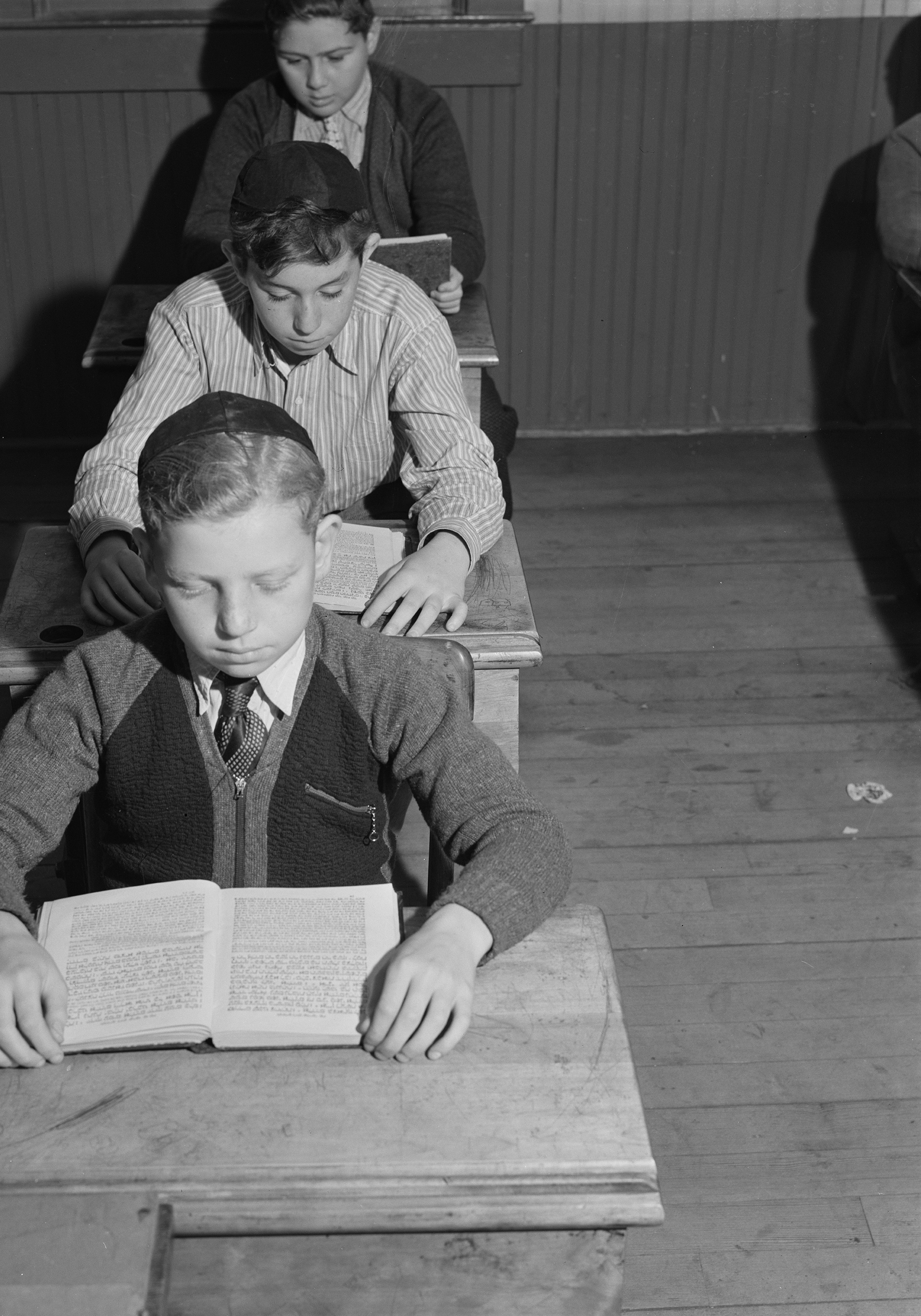
HEBREW SCHOOL, COLCHESTER, CT., 1940 (JACK DELANO/LIBRARY OF CONGRESS)
In 2012, Ana Robbins was the leader of a thriving 300-student Atlanta-area Sunday school program when she made a decision that stunned her community. She closed the school, turning her attention instead to a fledgling five-day-a-week afterschool program that blended childcare with Jewish learning and met in a trusted friend’s garage rather than synagogues. To most observers at the time, the move was inexplicable. By many measures, her “pop-up” Sunday schools were the envy of the local Jewish educational ecosystem. Robbins not only succeeded in attracting the children of notoriously difficult-to-reach interfaith and unaffiliated families, she and her team upended the prevailing narrative about Jewish supplementary schools—that they were dull and mediocre–by making them more like summer camp. But in Robbins’s words, her schools were “successful by all metrics except the ones in my heart.” Robbins’s story is unusual, but it captures both the promise and the limits of educational innovation in a system that resists structural change. Further, I’ll argue below, understanding why the American Jewish educational landscape has been so resistant to change over the last two decades will allow us to better define the changes that are needed and what should remain the same.
When Innovation Isn’t Enough
The logistics and time involved in training the teachers, setting up the pop-up schools, and “making them look like a carnival on Sunday mornings” was considerable. Robbins described the dissonance between “all the energy we were putting into the world,” and the modest impact that the schools were having on the religious and cultural lives of their clientele. She realized that her teachers and staff were helping families “check off a box” rather than fostering deep Jewish engagement.
In contrast, families in her afterschool pilot program were finding the experience transformative. The immersive environment allowed Robbins and her teachers to bathe the children in Jewish culture and rituals, including Hebrew language, songs, prayers, Jewish-themed art projects and Jewish holiday observances. Over the next few years, she designed a curriculum that was framed around Jewish values and encouraged her teachers to bring a Jewish lens even to the most quotidian of activities, like snack time and recess.
In the short run, Robbins’s decision to close the Sunday schools alienated a lot of parents and flummoxed community leaders. The schools’ place on Atlanta’s Jewish educational landscape had been hard-won—synagogue leaders had initially resisted it because it shook up their business model by decoupling religious school enrollment from synagogue affiliation. But its growth had been exponential, and at the time Robbins closed it, it was poised to become the largest Jewish supplementary school program in the Atlanta area.
In the long run, however, Robbins’s gamble paid off. Today, the afterschool program, Jewish Kids Groups (JKG), serves 250 youngsters in three locations throughout the Atlanta area. What’s more, in 2023, Robbins and her team launched the Jewish Afternoon School Accelerator (JASA), which is helping synagogues and other Jewish organizations across the country to launch and sustain afterschool programs.
Of course, JKG and similar afterschool programs are not a magic bullet. Precisely because they derive much of their appeal from meeting families’ childcare needs, the rate of family participation in afterschool programs drops precipitously when children become tweens and those needs diminish, just as it does at congregational schools.
Regardless, Jewish Kids Groups appears to be a classic Jewish educational innovation success story. Robbins and her Chief of Operations, Maya Selber, recognized a need—afterschool childcare—and developed a model that exploited it: delivering Jewish atmosphere and content without sacrificing the convenience and dependability that parents expected. And as JASA and similar independent programs in cities like Washington D.C., Evanston, Illinois, and Berkeley, California, demonstrate, Jewish afterschool programs can thrive in a variety of locales.
A System Shrinking in Plain Sight
But behind this encouraging development is a more complicated and troubling context. Jewish Kids Groups was created and grew during a peak period of Jewish educational innovation, powered by the increased investment in Jewish education spurred by the “continuity crisis.” Family foundations and local federations were pouring tens of millions of dollars into the system on an annual basis. Robbins and JKG benefited from some of this largesse, participating in programs like the Schusterman Foundation’s ROI Community and the Upstart Accelerator, and receiving funds from major Jewish foundations.
Yet, this same period witnessed the dramatic shrinkage of the Jewish supplementary school system in the United States, traditionally the backbone of American Jewish education. According to the Jewish Education Project’s recent census, enrollment plummeted in these schools between the 2006-07 and 2019-20 academic years from 230,000 to 135,087—a staggering 40% decline. (The only bright spot was the growth of Chabad, which also allows parents to bypass synagogue membership dues and hardly bodes well for the future of the non-Orthodox synagogue.) While some have pointed to methodological flaws in the study, the trend lines are uncontestable.
The causes of the drop are manifold. But chief among them are the declining rate of synagogue affiliation and the falling percentage of moderately affiliated Jews. The vast majority of part-time schools are operated by congregations for their members. Methodological differences between various Jewish population studies makes it difficult to compare across time. Still, there is general agreement that membership numbers have dropped from about half of American Jews belonging to a synagogue in 2000 to roughly one-third in the 2020 Pew study. Concurrently, the Conservative movement, which traditionally attracted large numbers of moderately affiliated Jews who were likely to provide a Jewish education to their children, has experienced a sharp demographic contraction. According to the Jewish Education Project study, there was a 20 percent dip in the number of religious schools between 2006-7 and 2019-20. About half of those closures were due to the shuttering or merging of Conservative congregations.
To be fair, the enrollment story cannot be entirely explained by demographics. Competing time demands, the shift to alternate models, including private tutoring, and the growing number of secular and cultural Jews (who overwhelmingly tell pollsters that “being Jewish” plays a marginal role in their lives), are also implicated. While there are undeniably fewer young non-Orthodox Jews today than there were a generation ago, congregations are also finding it challenging—though unevenly and with notable exceptions—to win over the “hearts and minds” of many young families.
Interestingly, what little we know about user attitudes suggests that satisfaction levels do not track with falling attendance rates. Indeed, field leaders report that many congregational schools serving a shrinking population enjoy high levels of parent satisfaction—underscoring that the system’s contraction reflects changing patterns of affiliation and priority more than widespread consumer discontent. This pattern is consistent with the possibility—suggested by these leaders—that the period of rapid contraction has largely passed, leaving a smaller but more self-selecting population for whom congregational schooling continues to hold value. The families who have left may simply be uninterested in the product, no matter its quality.
Equally important, nothing has taken the place of these schools—not afterschool programs nor any other intervention that emerged over the past 35 years. When measured against a system that has been hemorrhaging about 7,000 students per year, JKG and similar programs hardly register as a blip by comparison. My point is not to minimize Robbins’s achievement or the efficacy of JKG or similar programs. On the contrary, afterschool programs arguably represent the most significant innovation in K-12 Jewish education of the past 20 years. Even the ornament of the Jewish educational system—the day school movement—has witnessed little or no growth during this period outside of the ultra-Orthodox sector, notwithstanding the much-touted modest post-October 7 “surge.”
Why Reform Rarely Sticks
Yet, for all the excitement around afterschool programs like JKG, the conventional supplementary school has proven largely impervious to reform under prevailing institutional, demographic, and economic conditions, despite a widespread acknowledgement of systemic crisis. Robbins realized this when she pivoted from Sunday schools to afterschool programs. Even when investments are made in programs and training, the average congregational school remains stubbornly conventional. Innovations, when they happen, tend to be additive rather than aimed at fundamental redesign. Insiders will point to exceptions, of course, but their notability only proves the rule. Even well-funded, well-designed reform efforts tend to revert back toward familiar forms. Schedule, staffing, parental expectations, and the centrality of b’nai mitzvah quietly reassert themselves.
To demonstrate this point, it is worthwhile to look back at the results of one of the most significant congregational school innovation projects during this period: the Experiment in Congregational Education’s (ECE) Re-Imagine Project. Established in 1992 by the Rhea Hirsch School of Education at Hebrew Union College-Jewish Institute of Religion, the ECE sought to expand the definition of synagogue-based education and assist congregations in transforming themselves into “learning communities” for all ages. Funded by the UJA-Federation of New York, Re-Imagine was a major, multi-year initiative of the ECE between 2003 and 2015 in 32 New York-area congregations. Its stated objective was to create a new mindset about Jewish learning and encourage congregations to experiment with alternative educational models.
By one count, there were 20 multi-congregational initiatives to revitalize synagogue life between 1990-2000 alone. What made the ECE’s Re-Imagine Project noteworthy, beyond its scope, ambitious theory of change, and careful execution, was the intentionality of its directors not to repeat the mistakes of previous change initiatives, which tended to be piecemeal. Emphasizing vision-driven change, it involved stakeholders, including clergy, educators, parents, and lay leaders in a deliberative and extensive 18-month planning process prior to initiating a full-scale educational initiative.
Despite the thoughtful and painstaking process, project evaluators highlighted its limitations. While Re-Imagine built capacity for change and cultivated new leadership in the participating congregations, only five out of 32 congregations achieved the kind of deep structural and programmatic transformation sought by the ECE. (One congregational school that was singled out as a success story achieved what evaluators termed a “paradigm shift” in its educational approach and delivery system: For example, it integrated more experiential learning throughout its school curriculum, introduced new family education-centered programs, moved from a three-day to a two-day-a-week school model combined with more robust Shabbat programming, and introduced a more efficient organizational chart.) Of the 24 congregations that completed the process (eight dropped out), most made more modest changes, such as reconfiguring elements of their program or introducing optional alternatives alongside traditional offerings. Deep change occurred only in congregations that combined buy-in with strong organizational capacity and clear vision. Even then, success depended on careful implementation, aligned professional development, and sustained external funding. Notably, every site that achieved deep transformation received a Legacy Heritage Foundation grant.
This mediocre success rate begs the question: Why do even our best innovations struggle to transform the system? Any answer should be prefaced by an acknowledgement that K-12 supplementary Jewish education, as we know it in the United States, was largely invented in the late nineteenth and early twentieth centuries in response to prevailing circumstances, including the advent of free public education and its role as a portal to social and economic mobility. Following the Protestant example, Jews created a model designed to supplement the public schools with religious and moral instruction. While the dosage (i.e., number of instructional hours) varied over time depending on programmatic and logistical considerations, as well as the ideological commitments of its purveyors, the model itself remained fairly impervious to change, even when the site of instruction shifted from the communal urban Talmud Torah to the suburban synagogue.
Moreover, the Jewish schools’ legitimacy in the eyes of parents was purchased by borrowing the forms and frameworks of the public school system. These included not merely the furniture and choreography, but also larger structural and pedagogical constructs, such as age-graded, self-contained classrooms, subject-based learning, and standardized instruction.
The Grammar of Jewish Education
Historians of American public education Larry Cuban and David Tyack gave a name to this phenomenon: “the grammar of schooling.” Like the role of grammar in language, particular forms and their foundational logic fabricate meaning without our conscious awareness, shaping expectations and judgments even among stakeholders who are committed to reform. The pair’s 1995 book, Tinkering Toward Utopia, documented and theorized the American school system’s grammar and its entrenchment, viewing it as the reason for the system’s resistance to meaningful and lasting reform, despite a century of initiatives and efforts. Seen through this lens, the persistence of congregational schools—and the limited impact of even our best reforms—becomes less mysterious.
Cuban and Tyack entertain a variety of reasons for the persistence of the grammar of schooling in the US, including the preconceptions and expectations of stakeholders. Parents, teachers, students, and taxpayers know a “real school” when they see it. The organizers of the Jewish supplementary school system that we have today intuitively understood this. They ventured to sweep out the Eastern European inflected chedarim—the unregulated one-room schools, typically conducted by foreign-born teachers without educational credentials—and replace them with institutions that looked and felt like American public schools, down to the textbooks and the No. 2 pencils.
Would-be educational reformers argue that the Jewish supplementary school system is ripe for structural reform because the community has outgrown its need to simulate the look and feel of public schools. But the facts on the ground suggest that this is an oversimplification that obscures the system’s continued appeal. Even innovative educators tend to tinker only around the edges. They may shift the day of instruction from Sunday to Saturday, infuse the school with summer camp ruach (spirit), or introduce an element of programmatic choice for older students. But the underlying structure remains intact.
Fundamentally, many reform efforts underestimate the degree to which the Jewish supplementary school has developed its own ensconced grammar exemplified by limited contact hours, minimal demands on parents, mostly part-time staff, a blend of formal and informal pedagogies, socio-economic stratification, and the overarching place of b’nai mitzvah as a driver of curriculum and a graduation “credential.” These are not mere vestiges. On the contrary, they reflect and reinforce twentieth and early-twenty-first century socioeconomic and cultural norms. Even if our supplementary schools no longer need to look and feel like public schools, the model persists because its grammar continues to deliver these requisites.
Parents who have not altogether given up on supplementary Jewish education and synagogue affiliation often feel a vested interest in maintaining the status quo. There is a truism that society produces the educational system that it needs. While our public school system was shaped by the needs of the Industrial Revolution, its longevity is a testament to its continued effectiveness in preparing individuals for democratic capitalism. Similarly, for all its flaws, the current supplementary school model works for the (shrinking number of) moderately affiliated Jews who continue to find meaning and connection in legacy Jewish institutions. To borrow Pierre Bourdieu’s terminology, suburban synagogues remain institutions or fields where these Jews accumulate and wield their social, cultural, economic, and symbolic capital.
One Conservative-affiliated friend of mine exemplified this impulse when she explained without a whiff of cynicism that Sunday school drop-off and sporadic synagogue attendance are indispensable as much for business networking as they are for a sense of belonging. She added that her son’s upcoming bar mitzvah will be an opportunity for him to feel a sense of accomplishment in front of his peer group and for her and her husband to celebrate the milestone by “throwing a ‘kick-ass’ party” for her friends and family. Needless to say, if she has any complaints about the quality of her son’s religious education, she has no interest in fundamentally remaking the system.
ECE’s founder and prime mover, Isa Aron, acknowledged the resiliency of the grammar of supplementary schooling. She noted that the schools are typically trying to balance four competing criteria: First, most are engaged in enculturation, compensating for the lack of Jewish practice and culture in their students’ homes. Second, they are simultaneously trying to create community, compensating for the dissolution of the ethnic Jewish neighborhoods of yore. Third, schools are also trying to capture the “magic of camp” by leaning into experiential education. And finally, they must do all of this without sacrificing convenience and practicality. Families are busy and Jewish education is only one of many priorities, and often hardly the most important.
In Aron’s experience, the persistence of the dominant model of supplementary education is explained by its ability to balance these priorities. By contrast, structural innovations like family school, weeklong “winter camp,” and synagogue collaboratives tend to double down on one or two of these priorities while giving short shrift to the others. For example, family school maximizes enculturation and builds strong communities. But it makes significant demands on time that most families perceive as unrealistic. Likewise, the synagogue collaborative model (i.e., multiple congregations joining forces to deliver a single program) maximizes choice and practicality and can be a gamechanger for small congregations that lack capacity. It has long been used effectively on the teen level, to compensate for declining participation rates. But it minimizes opportunities for community-building and can weaken the bonds between families and their home congregations and clergy team.
Aron was cautiously optimistic about the scalability of structural interventions like the family school or winter camp and was even more bullish on the potential of curricular innovations like Hebrew Through Movement (HTM) and project-based learning. But she made this assessment prior to the release of the supplementary school census, and prior to the Covid-19 pandemic’s effective systemwide stress test. Today, while a few curricular programs like HTM have seen widespread adoption, the greater landscape tells a more sobering story of innovations that lacked staying power or that only succeeded in rearranging or reupholstering the furniture rather than redesigning the entire home.
More ominously, many parents unmoved by the conventional grammar of Jewish schooling no longer appear to be bought into the imperative of Jewish schooling at all. Fifteen or twenty years ago, the Gen-X parents who sent their children to Robbins’s Sunday school still felt an emotional need to check the Jewish education box. As the former president of the Reform movement, Rabbi Eric Yoffie, put it in 2001, parents subscribed to the “castor oil of Jewish life” approach to supplementary school: It was “a burden passed from parent to child with the following admonition: 'I hated it, you'll hate it, and after your bar mitzvah, you can quit’.” Today, this admonition evokes nostalgia as much as disgust. About half of contemporary non-Orthodox parents are apathetic about the entire Jewish educational system.
The 40% enrollment decline is undeniably significant and depressing. Yet, it may represent not system failure but rather a painful adjustment from a mid-twentieth-century model built on normative affiliation to a twenty-first-century reality of voluntary engagement. According to Rabbi Dena Klein, Chief Jewish Education Officer at the Jewish Education Project, about half of non-Orthodox, non-day school children currently attend congregational schools, and parent satisfaction surveys show they are happy with what they receive. This suggests that the decline reflects sorting rather than collapse. Families for whom the conventional model never worked have exited, leaving a smaller but more satisfied constituency.
This explains an otherwise puzzling phenomenon: how can supplementary schools be simultaneously failing and succeeding? The answer is that the grammar of supplementary education continues to work for those who value it, even as it proves irrelevant to those who don't. The 135,000 students who remain represent families who still find meaning in synagogue affiliation, value the bar and bat mitzvah milestones, and appreciate the balance between minimal commitment and Jewish connection. For them, the system isn’t broken. It’s functional.
This doesn’t mean the system is entirely stable. Programs face real challenges in recruiting qualified educators, and b’nai mitzvah may be weakening as a driver. Klein notes that enrollment peaks in sixth rather than seventh grade, suggesting the rite of passage exerts less pull than commonly assumed. But these challenges point toward strengthening what exists rather than pursuing wholesale transformation. The question is not how to reverse the decline—which is merely a symptom of wider sociological forces—but how to serve well the families who still choose congregational education while building viable alternatives for those who don't.
From Transformation to Portfolio Thinking
If the grammar of supplementary education persists for those it serves but cannot be reformed to serve everyone, the field needs a different strategy altogether. Not a single transformative model, but a field-level strategy that invests in multiple, distinct approaches. The problem, then, is not how to defeat the grammar, but how to plan responsibly around it.
Klein describes the Jewish Education Project's two-pronged approach: “For the 50% who are in congregational schools, we need to do everything we can to make them better,” while simultaneously finding “more pathways to entry” for those not engaged. This dual strategy—strengthen what works while building alternatives—offers a more realistic path forward than pursuing transformation the grammar resists.
The portfolio approach also means accepting that different programs serve different functions. Day schools and camps create intensive experiences for families willing to make significant investments of time and resources. Birthright Israel trips create powerful touchpoints but not sustained literacy. Congregational schools maintain connection and positive Jewish associations for moderately affiliated families but rarely produce transformation. None of these represents failure. They represent the actual landscape of American Jewish education, shaped by voluntarism, pluralism, and competing commitments. Success means helping families find their fit, not transforming everyone into something else.
Where does that leave Ana Robbins and programs like JKG? Aron included afterschool programs in her inventory of innovations. But I view them as fundamentally different from initiatives like family school and collaboratives because they generally operate outside the congregational school structure. Even when physically located within synagogues, like the Clubhouse at Congregation Rodeph Shalom in Philadelphia, or Club Spark at Congregation Beth Shalom in Northbrook, IL, afterschool programs are independent from religious schools. In most cases, participation isn’t even contingent on synagogue membership.
In this respect, JKG and its ilk may have more in common with initiatives like Birthright Israel and PJ Library. Led by entrepreneurs, they are characterized by institutional bypass, explicitly designed to circumvent intragroup politics, committee decision-making, conflicting stakeholder interests, and membership requirements. Afterschool programs resemble these initiatives in one additional respect: they offer a service that’s already needed in a familiar and values-aligned environment.
Of course, the analogy only goes so far. Birthright Israel and PJ Library rely on a permanent philanthropic infrastructure that afterschool programs can only dream of. Ironically, mega-donors often expect initiatives like JKG to become self-sustaining while making no such demands of their in-house programs. The entire educational innovation ecosystem of the 1990s-2010s rested on the premise that startups could become self-sustaining after three to five years of seed funding, and that once stable, funders would move on to the next promising initiative. This approach is starkly at odds with the traditional model, where federations provide communal organizations with annual support in perpetuity.
The myth of self-sustainability has resulted in the premature asphyxiation of many impactful interventions. “This is actually a very poisonous piece of rhetoric,” Robbins explained. “What we [innovators] were taught to say to funders was, ‘Oh no, no... it's going to be self-sustaining.... I'm not going to keep asking.’ That was a lie from the beginning.” Robbins has been a prodigious fundraiser. But unlike Birthright and PJ Library, JKG and other afterschool programs come with a hefty user price tag, which will necessarily constrain their growth. Monthly tuition ranges from $280 to $720, depending on the number of days per week, and does not include transportation costs. According to the website, need-based tuition assistance is available.
When it comes to its financial model, JKG has more in common with camps, day schools, and JCCs, which achieve sustainability through a combination of tuition/membership revenue and philanthropic giving. All of these programs serve a minority of the Jewish population who have both an interest in and the resources to benefit from their offerings. This “reality check” is a bitter pill for those concerned about equity and accessibility. (Some schools and camps offer financial aid.) But the Jewish educational system has long operated on a two-tier basis, with intensive education for the religious and economic elite and extension programs for the masses.
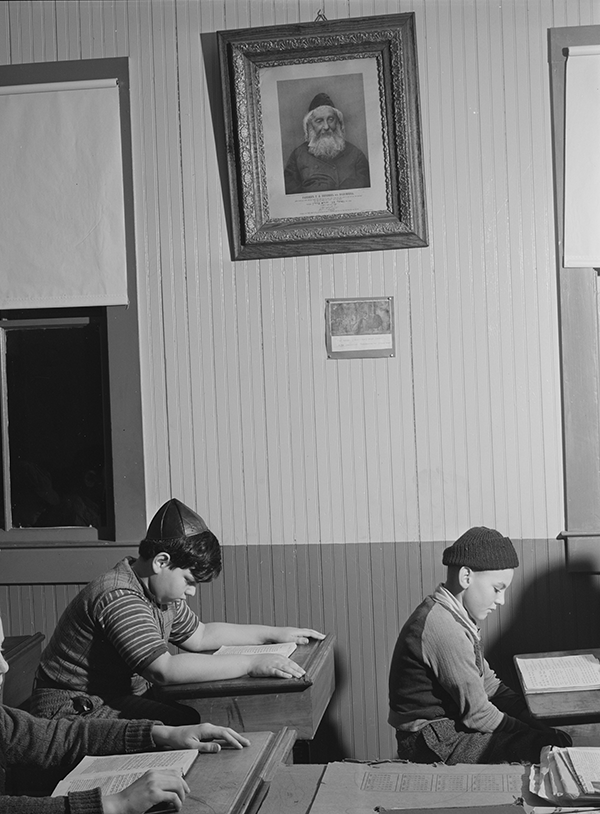
HEBREW SCHOOL, COLCHESTER, CT., 1940 (JACK DELANO/LIBRARY OF CONGRESS)
The father of the modern afternoon Hebrew school, Dr. Samson Benderly, embraced this approach in the early twentieth century as a matter of economic necessity, as well as an acknowledgement of America’s market-based system, which prioritizes consumer choice. Jewish survival, Benderly came to believe, would be safeguarded by a highly educated elite leading a receptive folk who were emotionally connected to Jewish culture, religion, and communal life, but not necessarily literate in classical Jewish sources. Thus, parental choice, based on a variety of criteria, including cost, was always a cornerstone of the system.
Contemporary supporters of Jewish education should unapologetically acknowledge our two-tier reality with its portfolio of options. But they can also prioritize sustainability by investing in permanent infrastructure rather than engaging in “innovation theater.” Likewise, they should recognize that the most innovative and impactful Jewish educational interventions in the twenty-first century emerged from family foundations and independent nonprofits, rather than legacy institutions. Funders should not be afraid to bypass current institutional constraints and invest primarily in direct service initiatives and independent organizations.
This approach could be a boon for organizations like JKG as well as digital platforms not tied to physical institutions. It will also likely encourage more direct-to-family programs, like P.J. Library, and other models that market straight to the end user. But the danger is that such programs can be highly transactional. Rather than fostering shared connections and community-building, they reinforce a consumerist mindset. This can be mitigated to some extent on the person-to-person level or through the cultivation of digitally-based communities grounded in shared interests. But at a time when social bonds are loosening, and Americans report higher levels of loneliness and declining trust, direct-to-family programs risk reinforcing this transactional mindset rather than fostering shared belonging. That shift could weaken the social capital Jewish educational institutions are meant to strengthen.
Conclusion
Ana Robbins’s decision to close a successful Sunday school—one that was effective by most conventional measures, yet misaligned with her evolving sense of purpose—captures a central tension in contemporary Jewish education. Over the past twenty-five years, the field has invested heavily in innovation, often expecting promising models to transform the system as a whole. When that transformation failed to materialize, persistence was read as stagnation and decline as evidence of failure.
But the evidence points to a different interpretation. The grammar of Jewish supplementary education has endured not because of institutional inertia or pedagogical blindness, but because it continues to work—for a smaller, more self-selecting population of families who choose it. Declining enrollment does not primarily reflect widespread dissatisfaction. Rather, it reflects demographic shrinkage, as well as sorting in a voluntary marketplace, one in which families whose needs are poorly served by congregational schooling increasingly opt out, while those who remain often report reasonable levels of satisfaction.
Seen in this light, the limited systemic impact of recent innovations is less surprising. Afterschool programs, day schools, camps, family education, tutoring, and other alternatives succeed by addressing distinct needs and lowering various barriers to participation. Their strength lies precisely in their specificity. None is designed to serve all families, and none should be judged by its capacity to replace the congregational school. Together, they form a portfolio of educational pathways—each calibrated to different family circumstances and educational goals.
The central challenge facing the field is not how to disrupt the grammar of Jewish education, but how to work more honestly within and around it. This means investing in congregational schools for those who continue to choose them, supporting intensive models for those seeking depth, and nurturing alternative entry points, often via institutional bypass, for families unwilling or unable to make long-term commitments. It requires letting go of the expectation that any single model can—or should—serve everyone. It also means accepting tensions. Bypass programs can undermine community-building. Intensive programs reify boundaries. Extensive programs reach more families but rarely produce transformation.
Funders also need to think less like venture capitalists in search of “unicorns,” and more like community caretakers. In particular, they should abandon the expectation that non-renewable three-to-five-year grants will produce self-sustaining transformative models. Maintaining a diverse educational ecosystem requires permanent infrastructure.
Robbins’s decision was not an admission of failure but a recognition of limits. The field needs similar clarity. Birthright creates touchpoints but not sustained literacy. Day schools transmit deep knowledge and emotional attachment but serve the elite. Congregational schools maintain connection but rarely produce transformation. None of these represents failure. They represent different accommodations to the deeper grammar of American Jewish life—voluntary association, denominational pluralism, and the perpetual negotiation between Jewish commitments and competing demands, such as school, sports, and family time.
Jewish educational vitality is more likely to emerge from that kind of clarity than from continued pursuit of a universally transformative solution. Such clarity, more than any innovation, may be what the field most needs.